

There is a deep connection between humanity and gold; something akin to a pact between the material world and the spiritual order. This is, moreover, an ancient bond. Excavation of a necropolis, uncovered in 1972 by construction workers on an industrial zone in Varna, on the Bulgarian Black Sea coast, revealed gold artefacts and jewelry buried more than 6,000 years ago. The finely worked metal, which probably came from deposits formed in the Balkan rivers and mountains, points to sophisticated metallurgy and metalworking skills. Dating from the earliest antiquity, this archaeological treasure expresses a universal fascination with gold that manifests itself in all four corners of the globe. “People have been making jewelry out of gold for thousands of years, in China and in India. Artefacts from ancient Greece, Mesopotamia or pre-Columbian America are enough to convince anyone,” says Jean-Jacques Richard, a retired expert witness and leading specialist in hallmarks and assay marks.

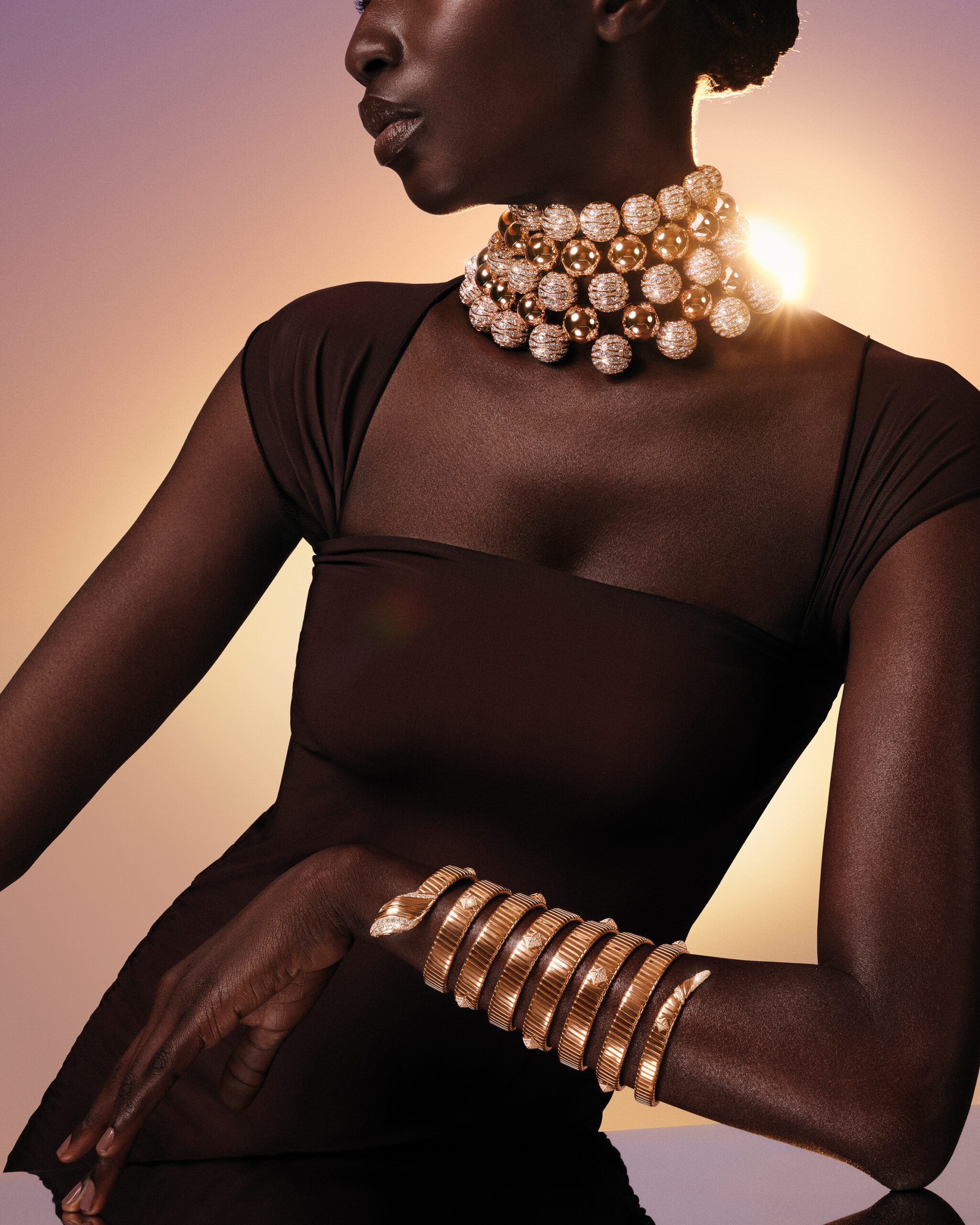
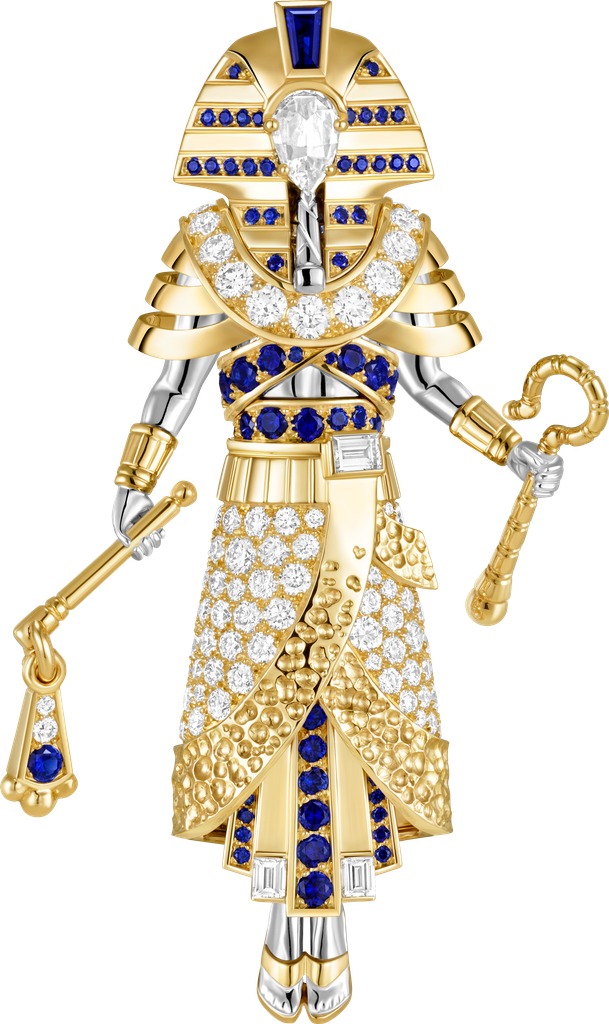
Further evidence of gold’s elite status comes from the Nile Valley, as noted by art historian Valentin Boyer, speaking before the presentation by Van Cleef & Arpels, in Paris in June, of a new high jewelry collection inspired by Egypt. The vast majority of the 180 unique pieces celebrate the noble metal, through an array of decorative techniques that blur the boundary between jewelry and sculpture. In his lecture, Boyer described how “art and power were closely linked during the dynastic periods. Gold, most of which came from mines in Nubia, which incidentally is the word for gold in ancient Egyptian, played a central role. Tutankhamun’s death mask was fashioned from several kilos of pure gold. The pharaoh was considered both a god and a ruler. This was expressed in the color of the metal, which evokes the sun, a source of life. Gold was believed to be the flesh of the gods. That it does not tarnish or corrode makes it a symbol of eternity, rebirth and life after death.”
GOLD OVER GEMSTONES
In 2026 this fascination is expressed differently but with the same intensity. In purely pragmatic terms, the price of gold has doubled in two years. This simple fact has transformed the way many professionals consider the precious metal. “Gold prices have been a gamechanger,” comments Hector Yaiche, a gemologist and jewelry expert who routinely provides auctioneers, state-appointed officers and private individuals with professional appraisals. “In my early career, I’d count 30 euros for one gramme of 18k gold. Now we’re closer to 80 euros. To hammer the point home, I’d say the weight of gold in an item of jewelry has become more important than the presence of stones.”
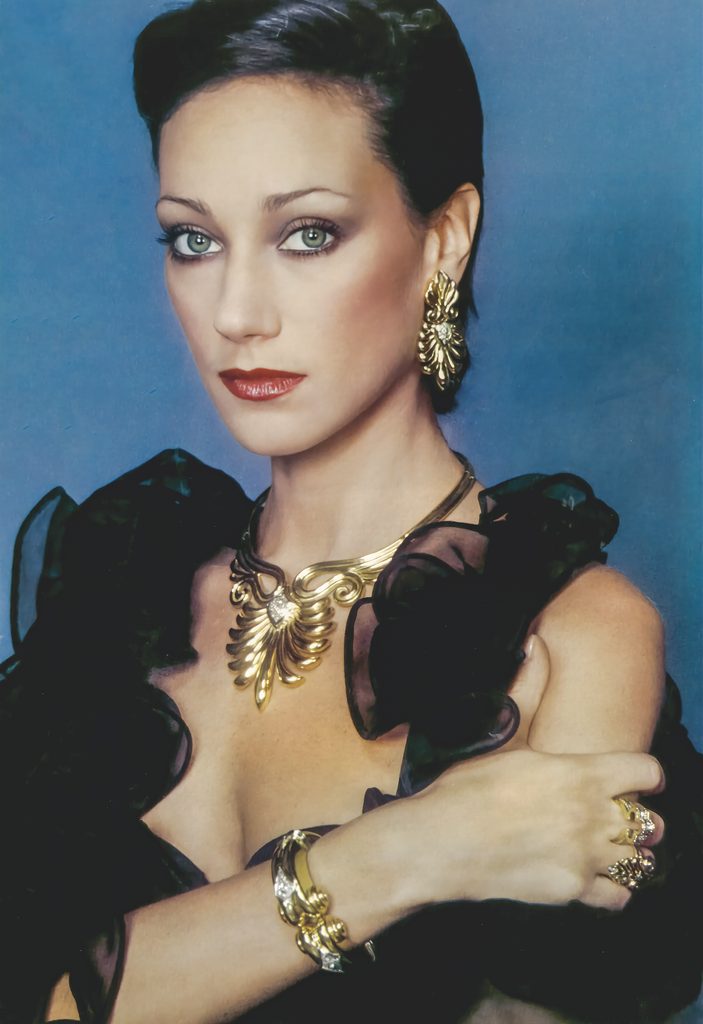
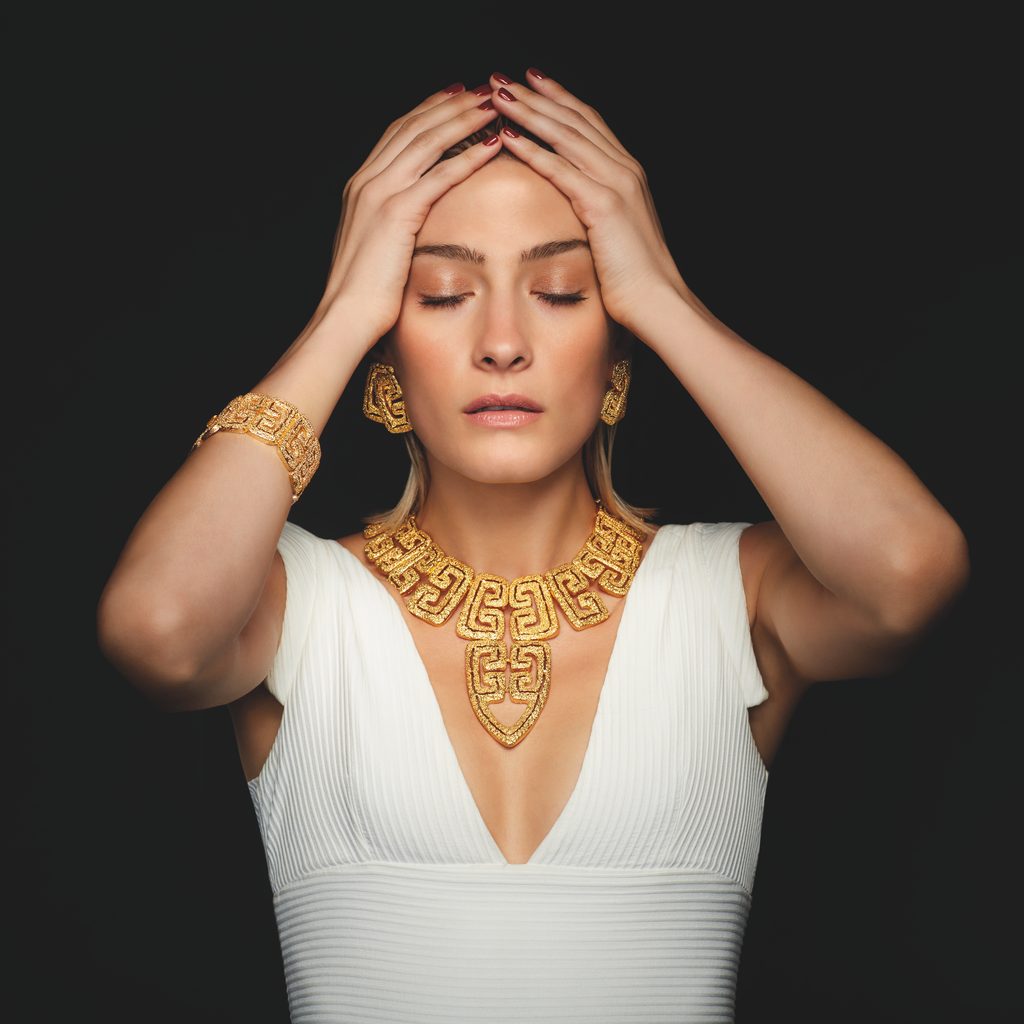
Gold is omnipresent in jewelry creation. “In the global jewelry market, we’re observing a remarkable shift towards gold, which represents timeless elegance and lasting beauty,” notes Lucia Silvestri, creative director for Bulgari. Recent record high prices could feasibly have led jewelers to make more sparing use of the yellow metal. The exact opposite is true. Rather than shape gold into openwork structures whose delicate, airy forms engage a dialogue between solid and void, jewelers are embracing a sculptural aesthetic, where crisp lines and generous volumes achieve their fullest expression. Marianne Le Clère Papalexis is president of Zolotas, a jewelry house, founded in Greece, that specializes in gold. “This upsurge of interest in more substantial volumes began in 2024. At Zolotas, it’s something we’re seeing across every age group, from 30 to 65, and every European market,” she says, adding that “demand is growing for larger, more substantial pieces, some in excess of 500 grammes. These are typically the pieces we were making in the 1980s, in particular tapered chokers and torques. After two decades marked by an appetite for figuration, escapism and exoticism, the 1980s saw a return to fundamental shapes fashioned out of metal.”
A PROTECTIVE ROLE
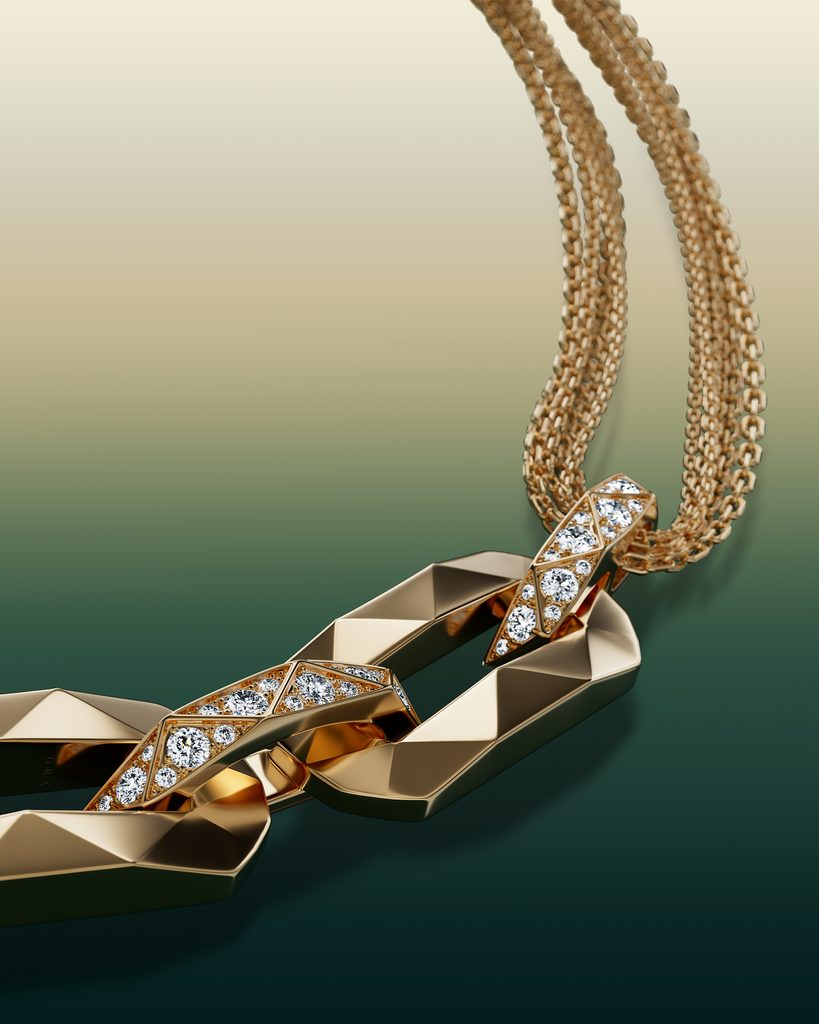
The opulence of 1980s designs has a precedent in another aesthetic vocabulary: that of the 1930s and late Art Deco, which marked the ascendancy of Tank rings and bracelets. The reason lies not with chance but world events, as Vanessa Cron, a jewelry historian and curator of multiple exhibitions for Chaumet and dinh van, explains: “In 1934 the United States Gold Reserve Act set the price of gold at $35 per troy ounce. The Bretton Woods Agreement of 1944 fixed the dollar, the only currency convertible to gold, to the price of gold. President Nixon’s decision in 1971 to end the gold standard and the dollar’s convertibility resulted in spectacular price rises, culminating at $850 per troy ounce in January 1980, in the wake of the overthrow of the Shah of Iran and the Soviet invasion of Afghanistan. Once again, gold became the metal of choice for jewelry, valued as a safe haven and a liquid asset. It played its role as protector, providing material security and perhaps from a more talismanic perspective, too.”