

Home

|

Houses

|

Cartier

Wild Fauna ©Cartier

THE HOUSE

Cartier

Cartier

Wild Fauna ©Cartier
Wild Fauna ©Cartier

Home

|

Houses

|

Cartier

Clean shapes and lines

At Cartier, it all begins with the sketch. Before the gemstones and metal, there is the pure line that defines an instantly recognizable piece. This obsession with the line has made the house one of the few that can claim to be the source of iconic timepiece and jewelry designs capable of reinventing themselves over time.

Cartier


FOUNDER

Louis-François Cartier

creation

1847, Paris

headquarters address

33 rue Boissy d'Anglas, 75008 Paris, France


The story begins in 1847, when Louis-François Cartier took over his master craftsman’s workshop in Paris. While his son, Alfred Cartier, succeeded him, it was primarily to his three grandsons that the house owed its rise to prominence. In Paris, Louis experimented and forged the company’s reputation as an innovator. Meanwhile, Pierre spearheaded global expansion, from New York to London, where he set up his younger brother Jacques before the latter ventured to India—a new land that inspired an entire category of jewelry in which Cartier would become a pioneer. The three brothers divided the world among themselves at the turn of the 20th century. They opened a store on Rue de la Paix in Paris in 1899, in London in 1902, and then on Fifth Avenue in New York in 1909. Their diamond-set jewelry stood in contrast to the Art Nouveau pieces of the time and particularly captivated royal families. King Edward VII of England, who commissioned his tiaras from the house and granted it its first certificate as an official supplier in 1904, went so far as to bestow upon it the now-famous title “jeweler to kings, king of jewelers.” From a supplier to the royal courts, Cartier gradually became the creator of a style that would come to dominate the field.
Love ©Cartier

A style rooted in its time

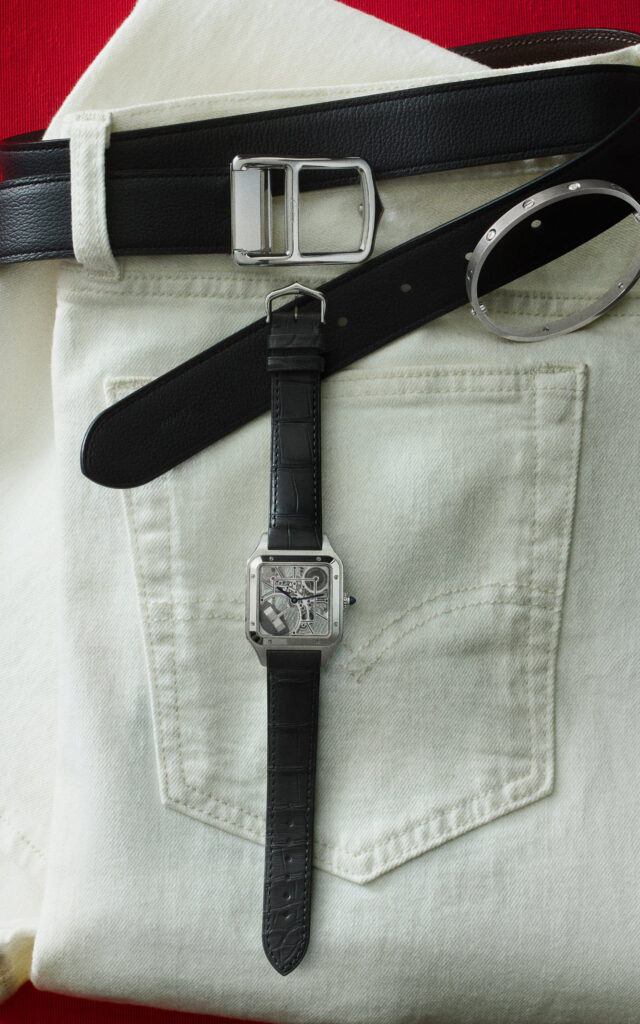
This style is guided by four principles that the House has always adhered to: purity of line, precision of form, balance of proportions, and exquisite attention to detail. From this discipline emerges a family of iconic creations inspired by objects of their era. The Santos watch, designed in 1904 for the aviator Alberto Santos-Dumont so that he could tell the time at a glance while in flight, established the square watch on the wrist at a time when the watchmaking world swore by round shapes. The Tank, introduced in 1917, takes its silhouette from a tank viewed from above, with its parallel struts extending seamlessly into the bracelet. Other iconic pieces include the Trinity ring with its three intertwined bands from 1924, the Love bracelet from 1969, and Juste un Clou, which transformed a simple nail into a piece of jewelry in the 1970s. These designs have stood the test of time without ever looking dated, because Cartier has evolved them with the times, and it is this ability to reinvent itself that makes them instantly recognizable.

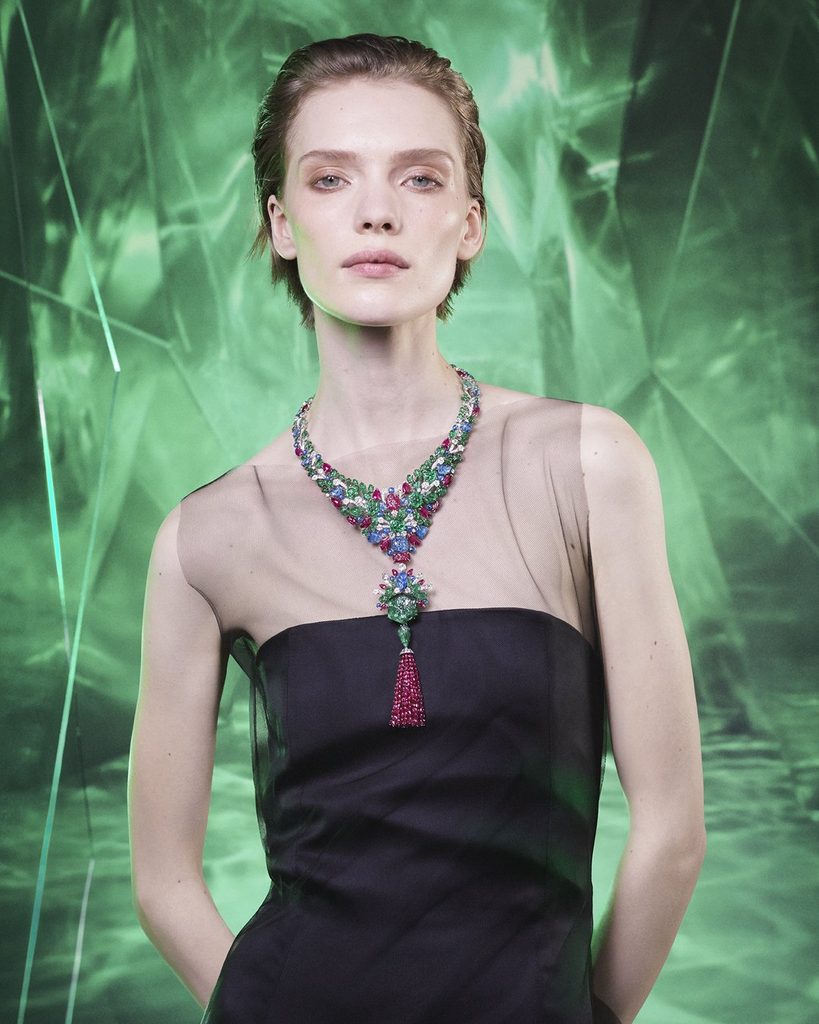
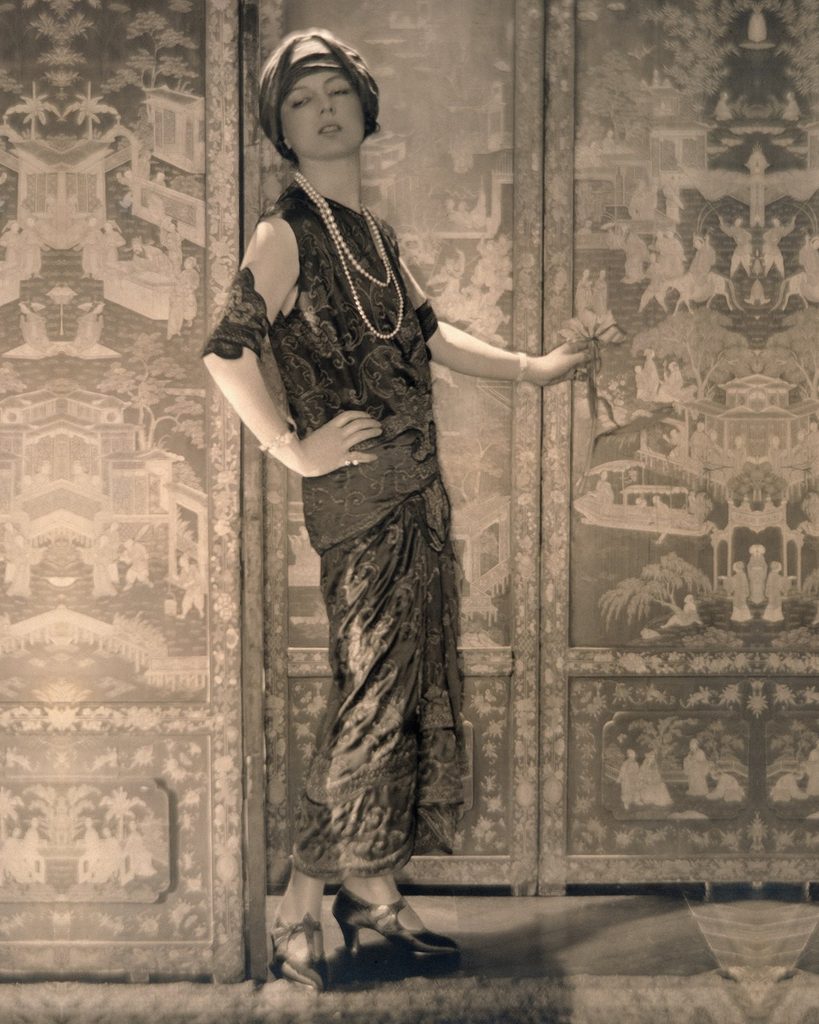
The clean lines are matched by the boldness and drive to innovate pioneered by Louis Cartier. First and foremost, through the materials and colors. As early as the first decades of the century, Cartier dared to use platinum, pairing it with rubies, emeralds, and sapphires cut into leaves and flowers—combinations that were unprecedented at the time. Fueled by the travels of Jacques Cartier, who marveled at the gems of Rajasthan, this style drew inspiration from Mughal India. The first pieces were created upon his return, right in the midst of the Art Deco period, and were worn by wealthy and famous women. A tiara for the English countess Edwina Mountbatten, a necklace for the socialite Daisy Fellowes, and colorful cascades that would not take on the name “Tutti Frutti” until the 1970s—a name that captures their fruity cheerfulness and unapologetic exuberance.
©Cartier
©Cartier
Jeanne Toussaint ©Cartier

The enduring legacy of Jeanne Toussaint

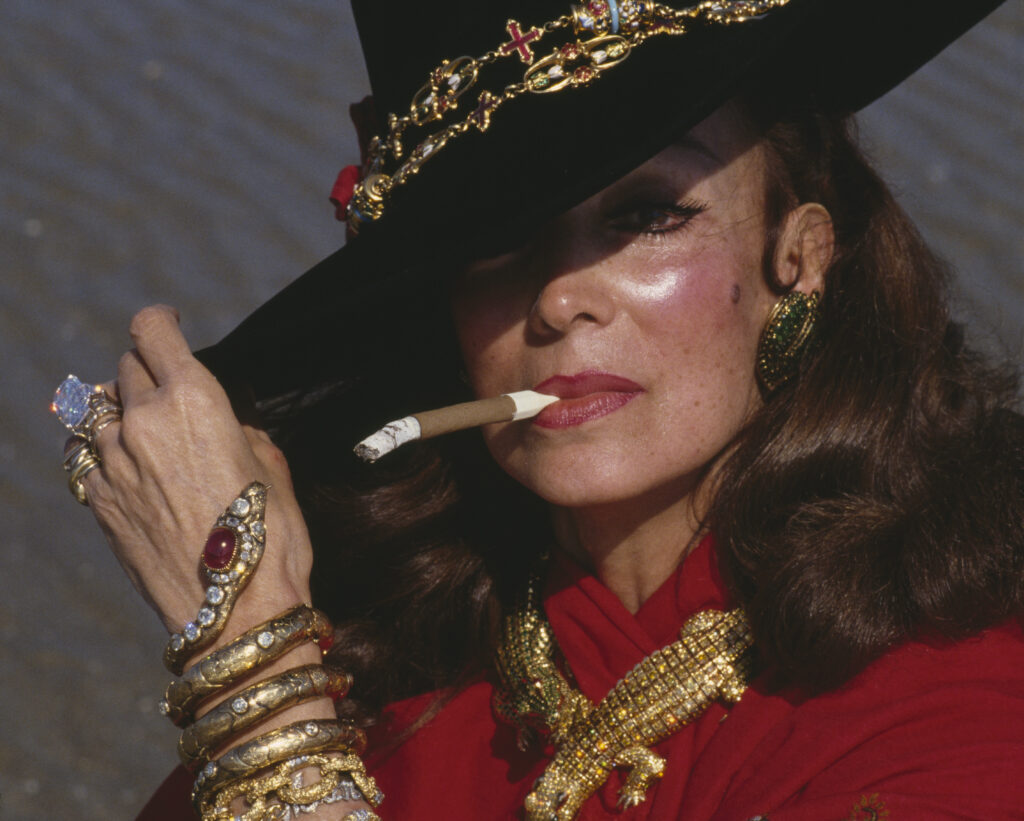
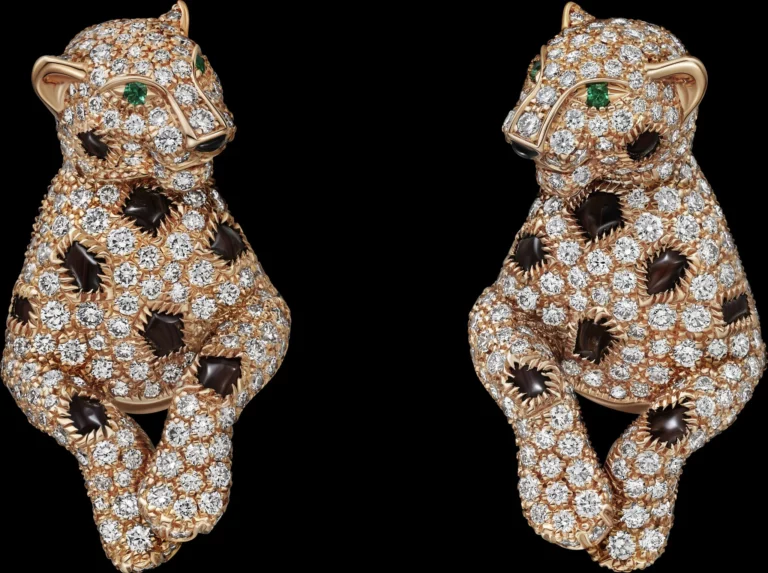
The other side of Cartier’s signature boldness is embodied by one woman: Jeanne Toussaint. Nicknamed “the Panther” for her strong-willed character, she joined the house in the early 1920s and, in 1933, became head of design—a role that had until then been dominated by men. She embraced the feline that served as her nickname, and her personal signature gradually became the house’s emblem. First an abstract symbol on a 1914 watch, then figurative by 1917, and finally sculptural in the 1940s thanks to Jeanne and the designer Pierre Lemarchand, who together sketched a new animal silhouette—notably in a brooch created for the Duchess of Windsor in 1948, in which the panther stands atop an emerald. A free-spirited woman, Jeanne Toussaint challenged conventions and established her distinctive jewelry style, chosen by strong-willed women—the Duchess of Windsor, Daisy Fellowes, María Félix, and Barbara Hutton—who decided for themselves which piece to wear, where, and how.

Beyond these fundamentals that have shaped Cartier’s identity, there is another pillar that forms part of its DNA: the transmission of knowledge. This is particularly embodied today by the Cartier Jewelry Institute, which has been committed since 2002 to promoting the jewelry trades and works to preserve and develop these crafts through a training program. The House also supports young talent through the Cartier Prize for Tomorrow’s Talents, created in 1995 for watchmaking and extended to jewelry in 2026. It is a way of keeping its heritage alive beyond the showroom, by entrusting it to those who will carry it forward into the future.
iconic collections

Into the wild ©Cartier

Into the Wild: the new bestiary

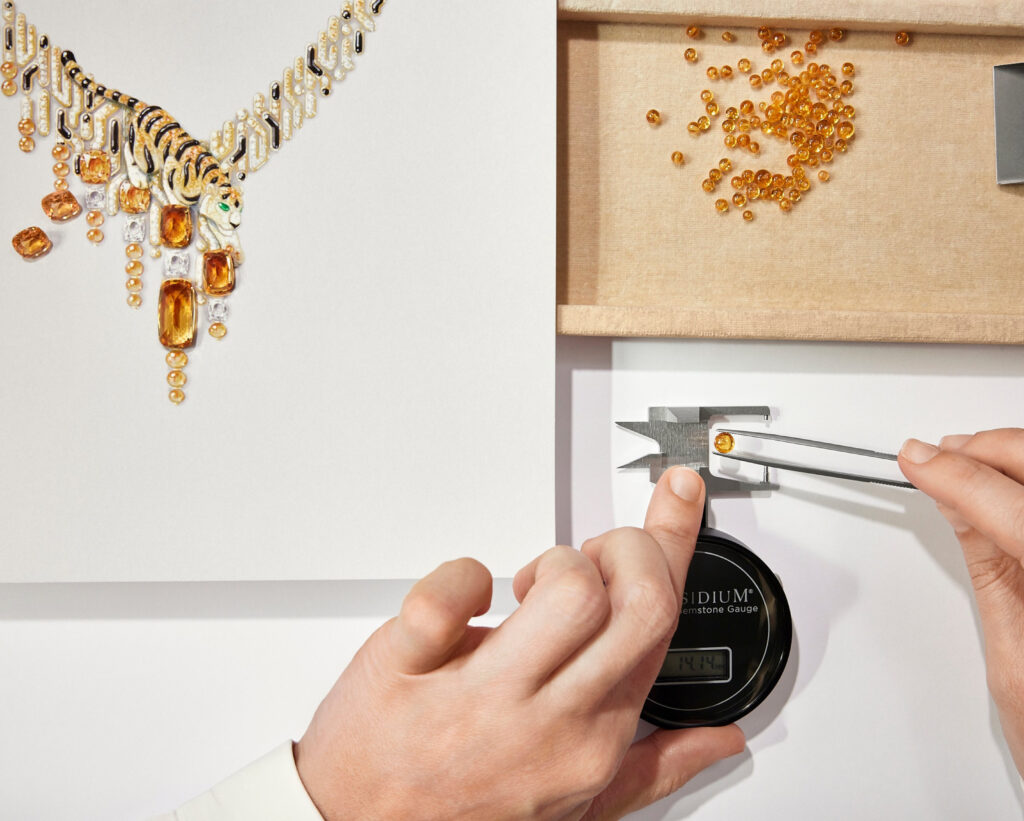
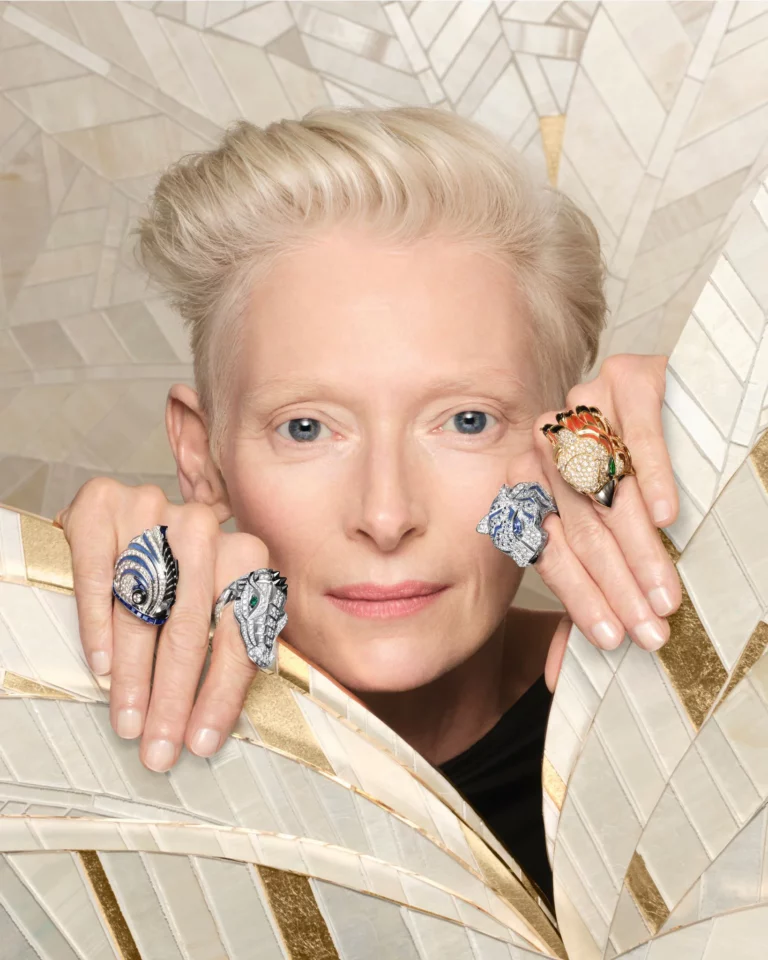
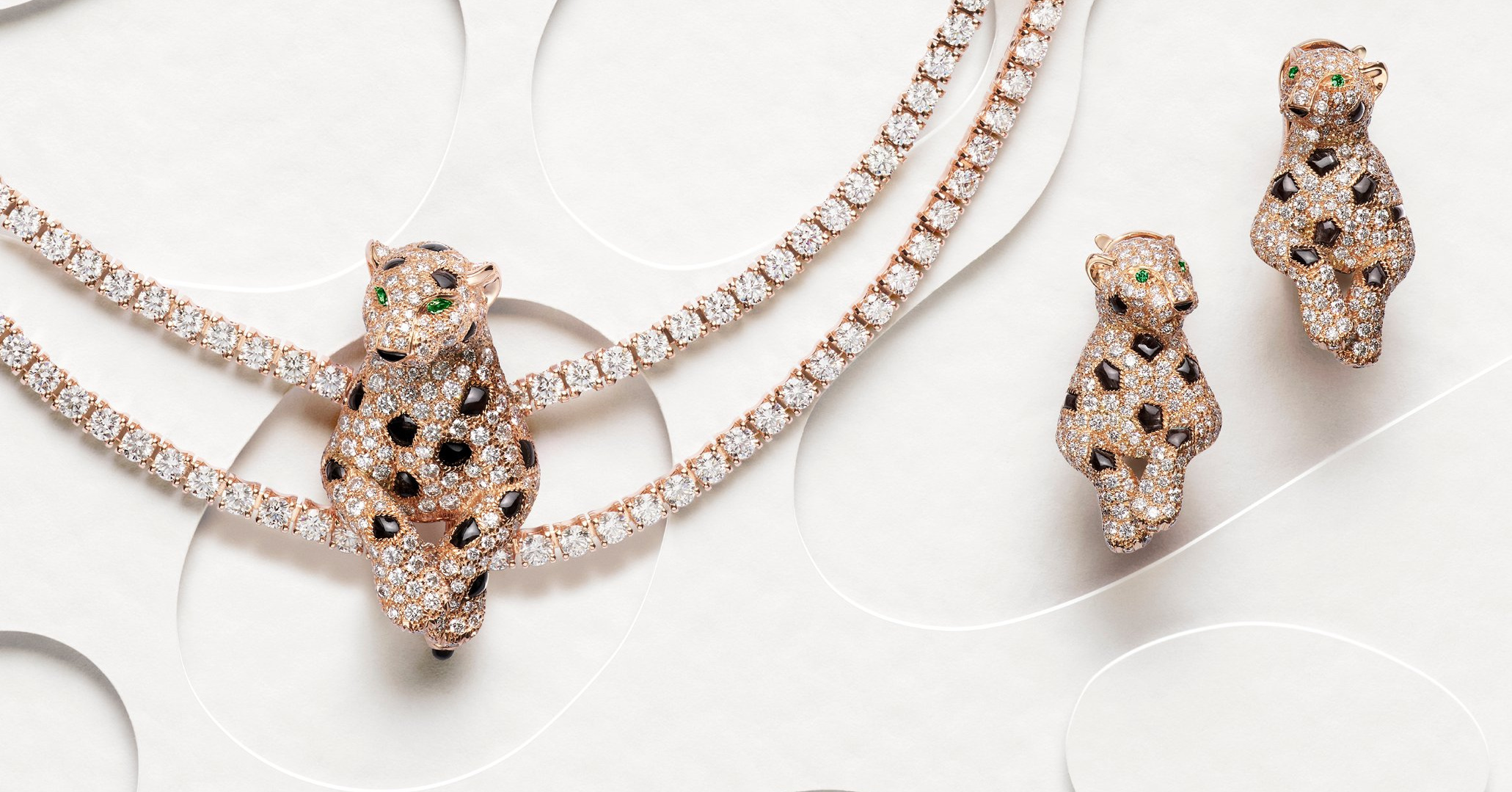
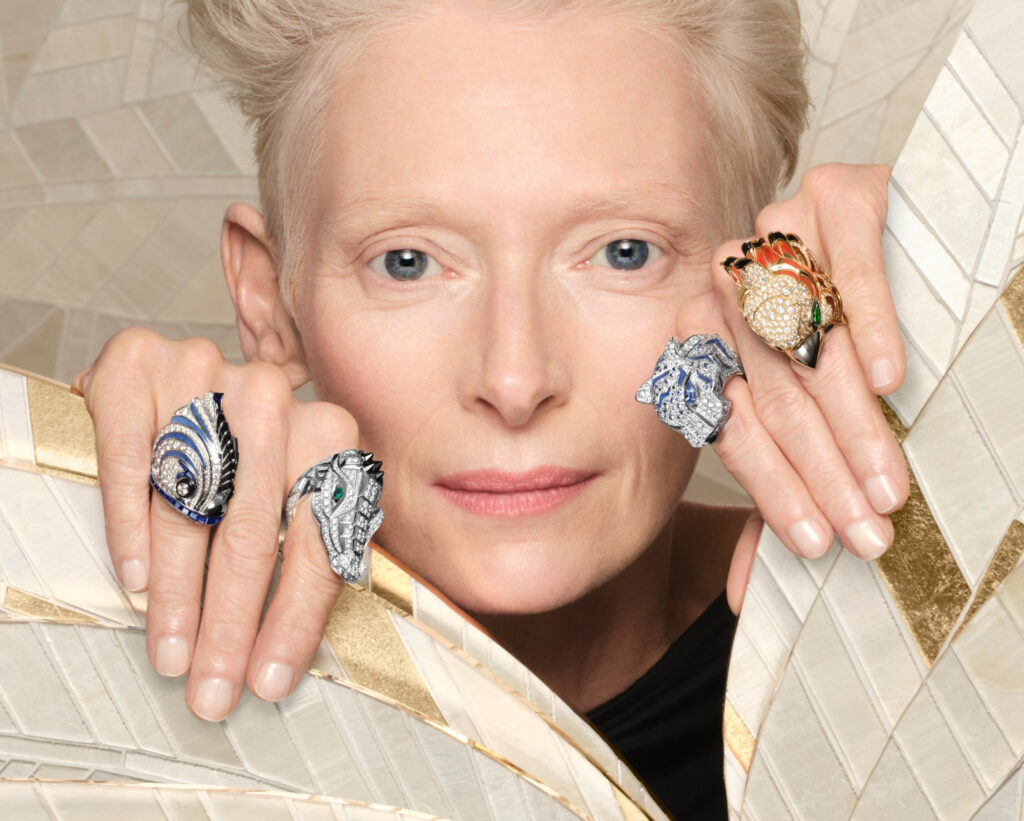
While the panther has reigned supreme ever since Jeanne Toussaint made it one of the house’s iconic symbols, it is far from being the only animal featured in its creations. Flora and fauna are among Cartier’s favorite sources of inspiration, and a veritable bestiary populates its stylistic repertoire. “Into the Wild” is the latest expression of this theme, featuring a gallery of creatures sculpted from metal. Here, tiger, crocodile, parrot, carp, and even rhinoceros rings delicately “bite” the finger; there, necklaces and bracelets featuring crocodile or tiger heads, whose heads remain true to the animal’s anatomy while the fully articulated bodies consist of a series of links made of diamonds and colored gemstones. Straddling the line between naturalism and abstraction, each piece of jewelry represents a feat of craftsmanship, blending gold and platinum with gemstones (onyx, coral, garnet, gray agate, aquamarine, quartz…). The majestic and iconic Panther, meanwhile, takes shape on a bangle bracelet adorned with an immaculate coat where shagreen and caviar pavé settings alternate. Its emerald eyes are framed by a fur-like setting that evokes the animal’s fur. Thus adorned, each piece of jewelry exudes strong character and offers everyone the opportunity to choose their own totem.

read more

Love ©Cartier

Love: the icon reinvented

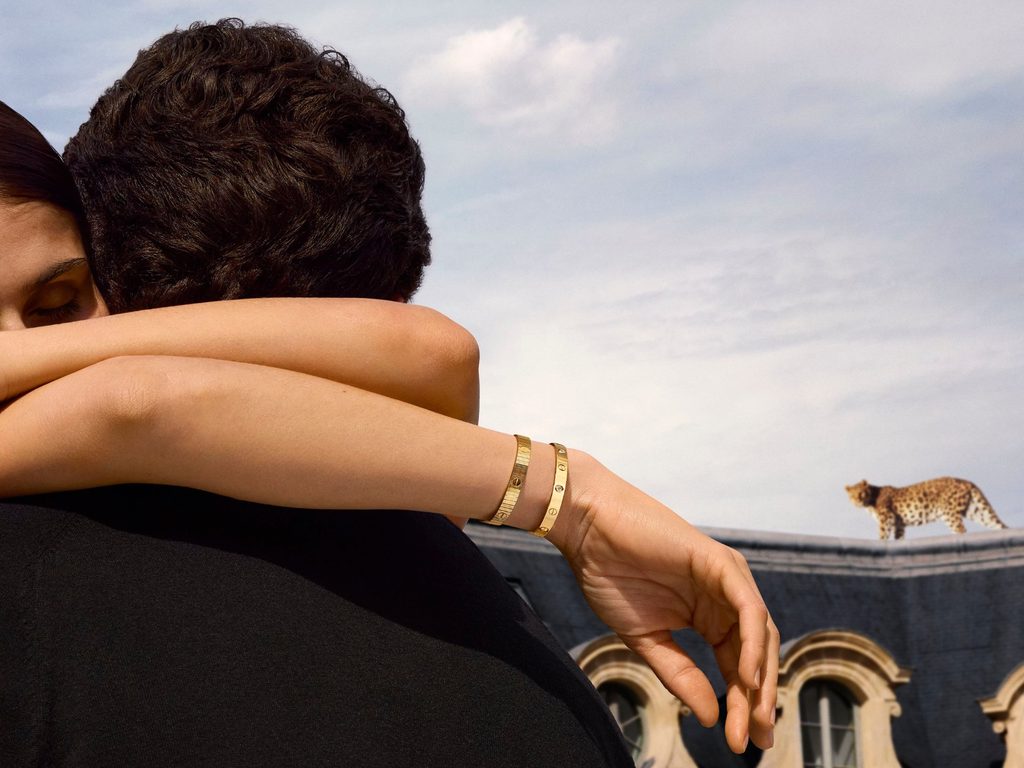
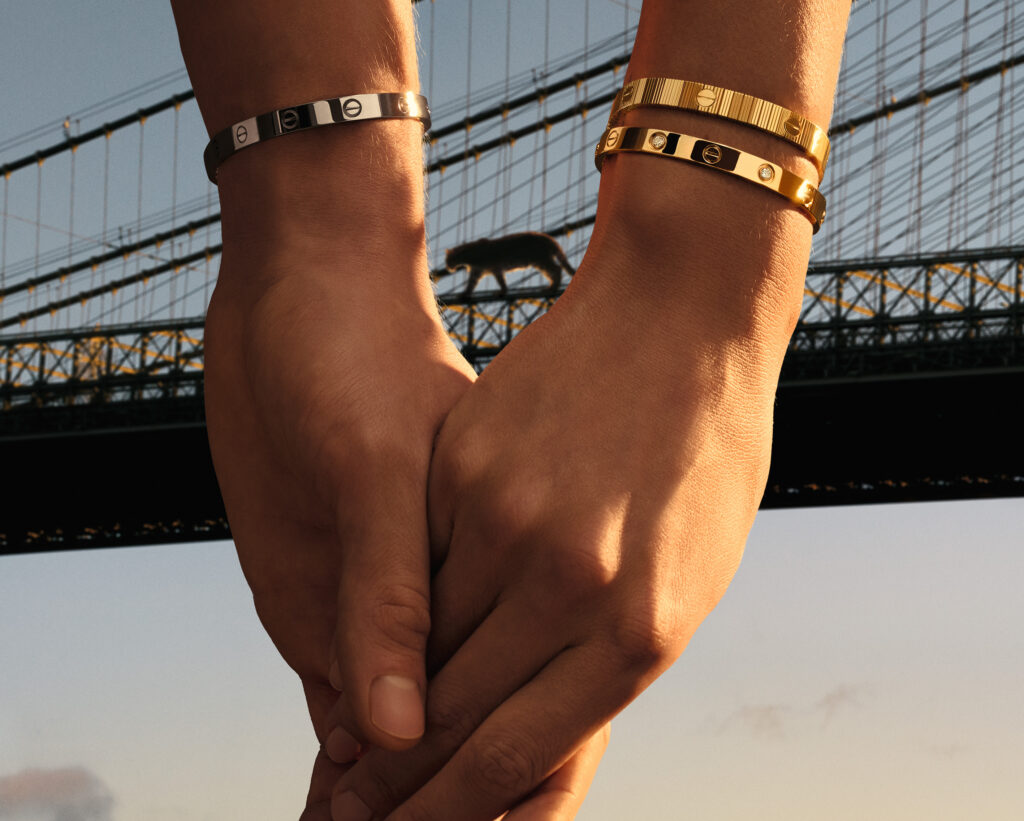
Created in 1969 in New York by Aldo Cipullo, the Love bracelet consists of two rigid semicircles adorned with engraved screwhead motifs and fastens with a special screwdriver. It was conceived as the perfect piece of jewelry for couples, sealed on the wrist like a vow, with the giver fastening the bracelet onto their partner’s wrist. A famous advertisement featuring the hands of a man and a woman, each wearing their own Love bracelet, quickly turned it into an icon. Unisex and instantly recognizable, the design has lent itself to countless variations: rings, small or medium-sized models, pendants, and diamond-paved pieces. In 2025, Cartier unveiled a flexible version that hugs the body like a second skin: the Love Unlimited. It becomes a gold ribbon adorned with fluted links, still punctuated by its signature screws, whose invisible clasp—operated by a screw—brings together some two hundred miniaturized components assembled to disappear entirely. You can attach a second bracelet to it, split it in two, or link it endlessly… it’s a new way to wear the Love. Recently, Cartier replaced the screws with gemstones, giving it yet another new look through ultra-colorful versions set with varying degrees of gemstones. It’s a way to ground the icon in its era and to continually reinvent it without ever betraying its essence.

read more

Clash ©Cartier

Cartier Clash: craftsmanship in the service of the house's signature style

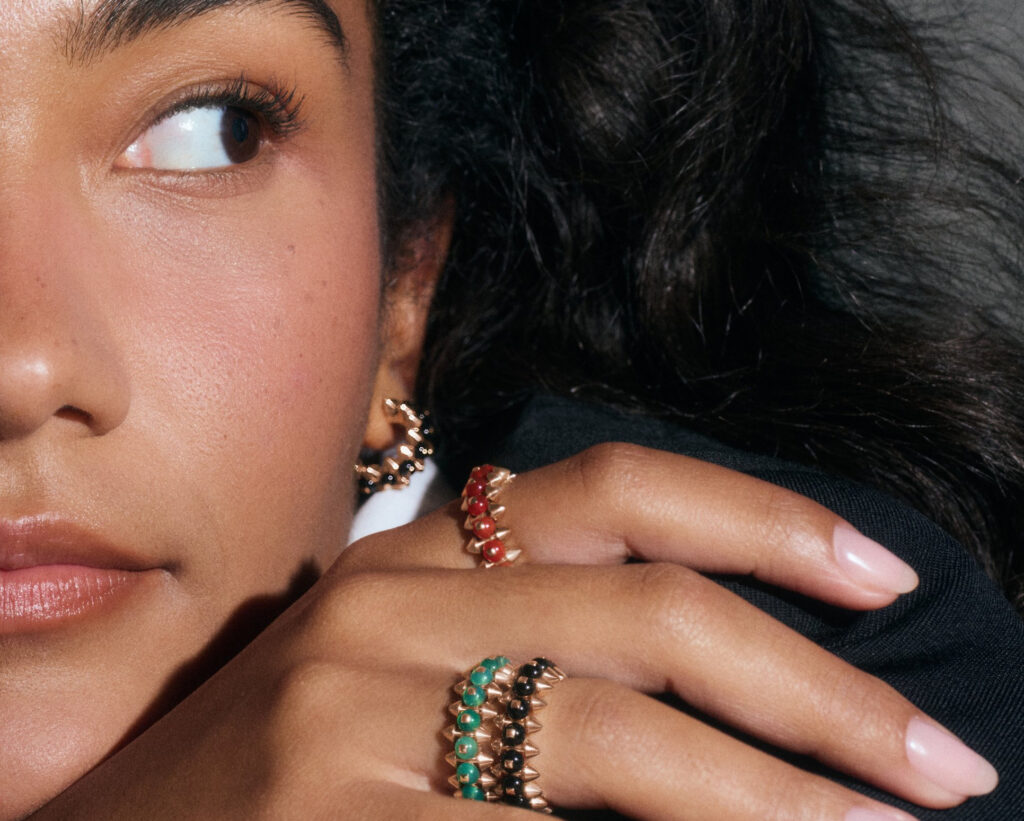
As early as the 1920s and 1930s, Cartier incorporated studs, square nails, and clustered beads into its designs to add volume to its jewelry and timepieces. The brand revisits this aesthetic heritage through Clash, a collection that fuses these industrial-inspired elements into a powerful, graphic, serrated mesh that plays on the tension between the precious and the mechanical. The feat lies in the ingenious construction of the pieces, which are fully articulated through a succession of hand-polished elements—up to six hundred in some pieces—that are interconnected while retaining a certain mobility to ensure an exceptionally fluid fit. The brand recently expanded the collection with yellow gold versions, including necklaces and bracelets with split strands, XL pieces, a three-finger ring, and colorful variations featuring hardstone beads (red or green-tinted agate, pink chalcedony, onyx) are interspersed between the gold prongs, pierced and secured with a Parisian pin. Unisex and modular, Clash embodies urban and contemporary jewelry that is always in motion.

read more

https://www.youtube.com/watch?v=UxrVuVne3us&t=1s

In Pictures

©Cartier

Grain de Café ©Cartier

©Cartier

En Equilibre ©Cartier

©Cartier

Le Chœur des Pierres ©Cartier

Maria Félix ©Cartier

Maria Félix ©Cartier

©Cartier

Santos & Love ©Cartier

en équilibre ©Cartier

En Equilibre ©Cartier

©Cartier

Grain de Café ©Cartier

©Cartier

En Equilibre ©Cartier

©Cartier

Le Chœur des Pierres ©Cartier

Maria Félix ©Cartier

Maria Félix ©Cartier

©Cartier

Santos & Love ©Cartier

en équilibre ©Cartier

En Equilibre ©Cartier

Discover our entire collection of home goods