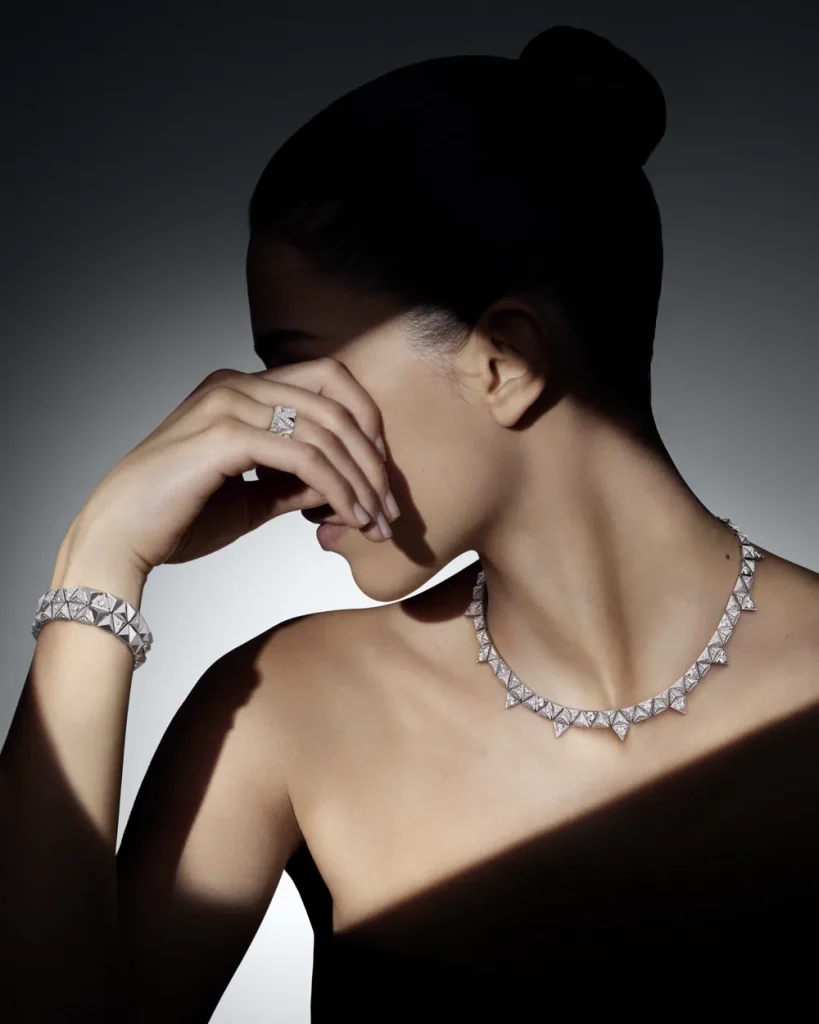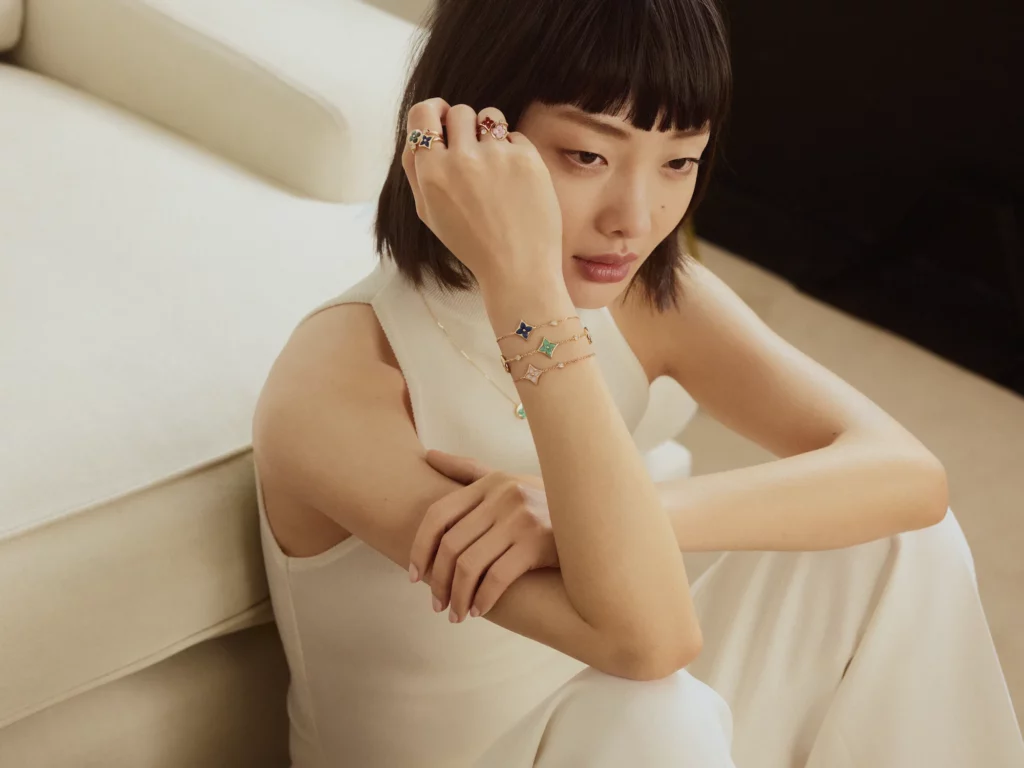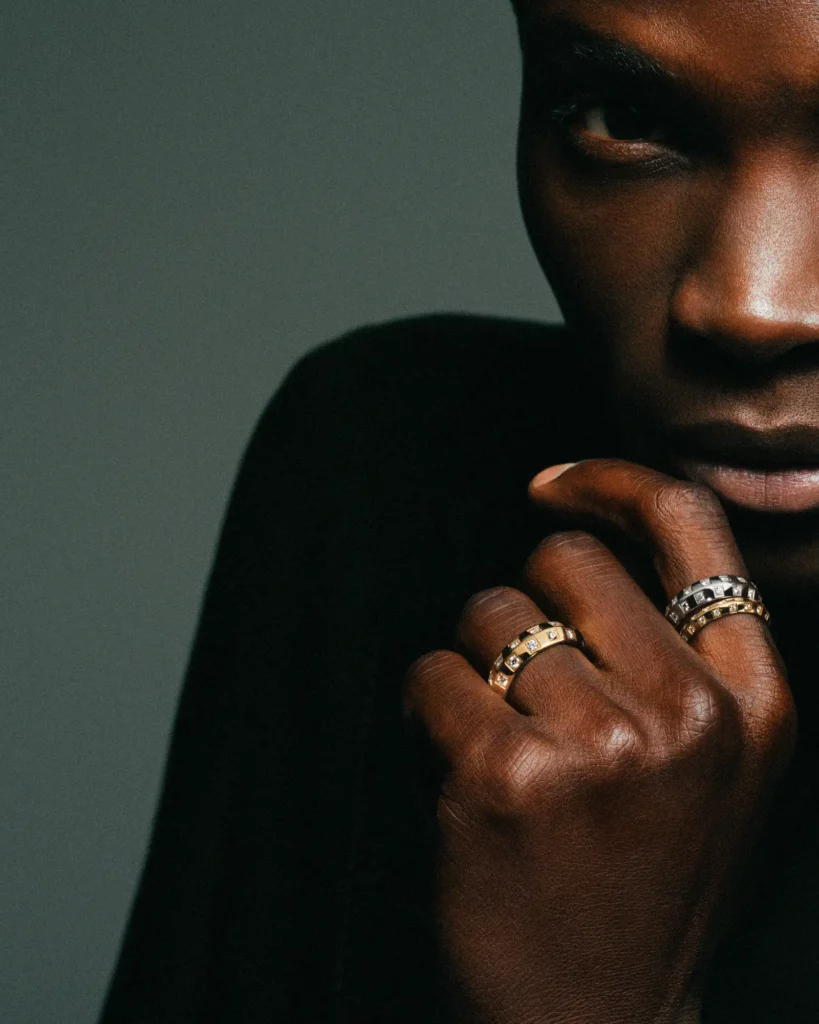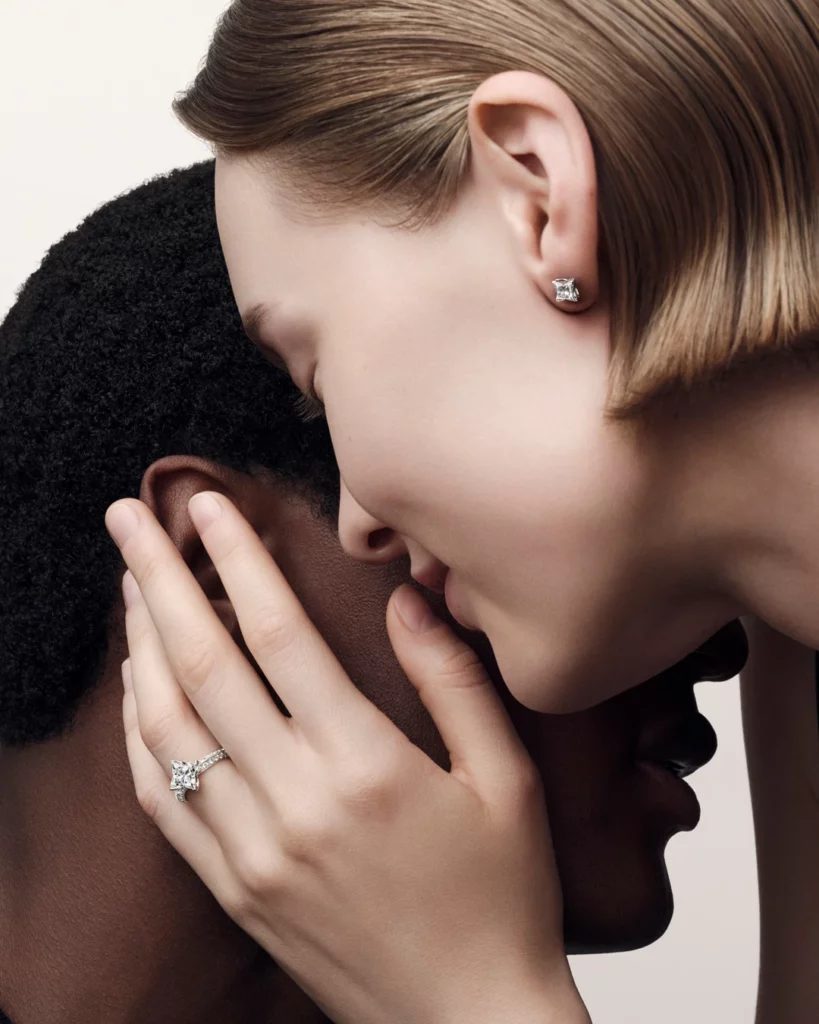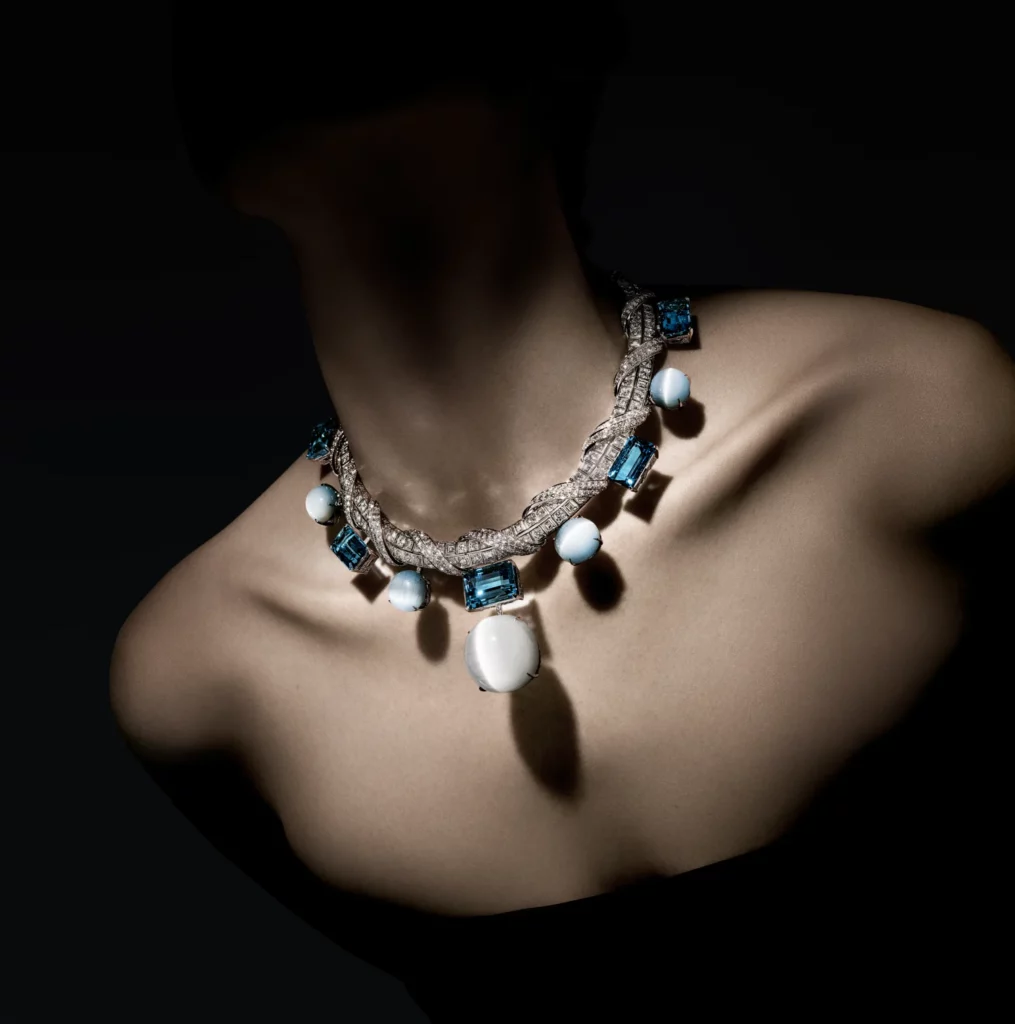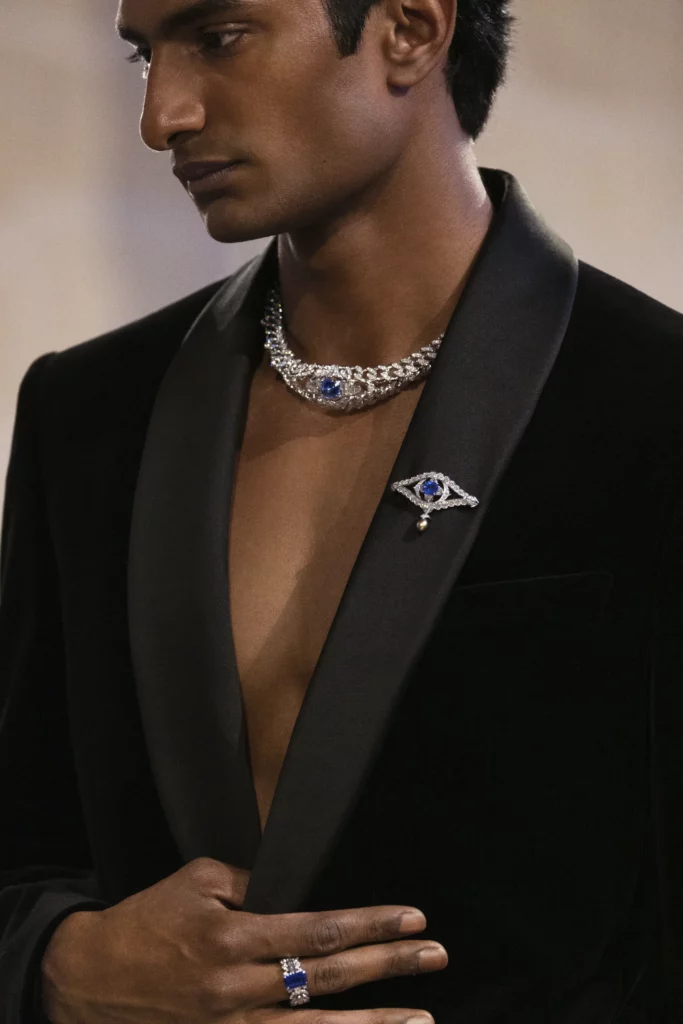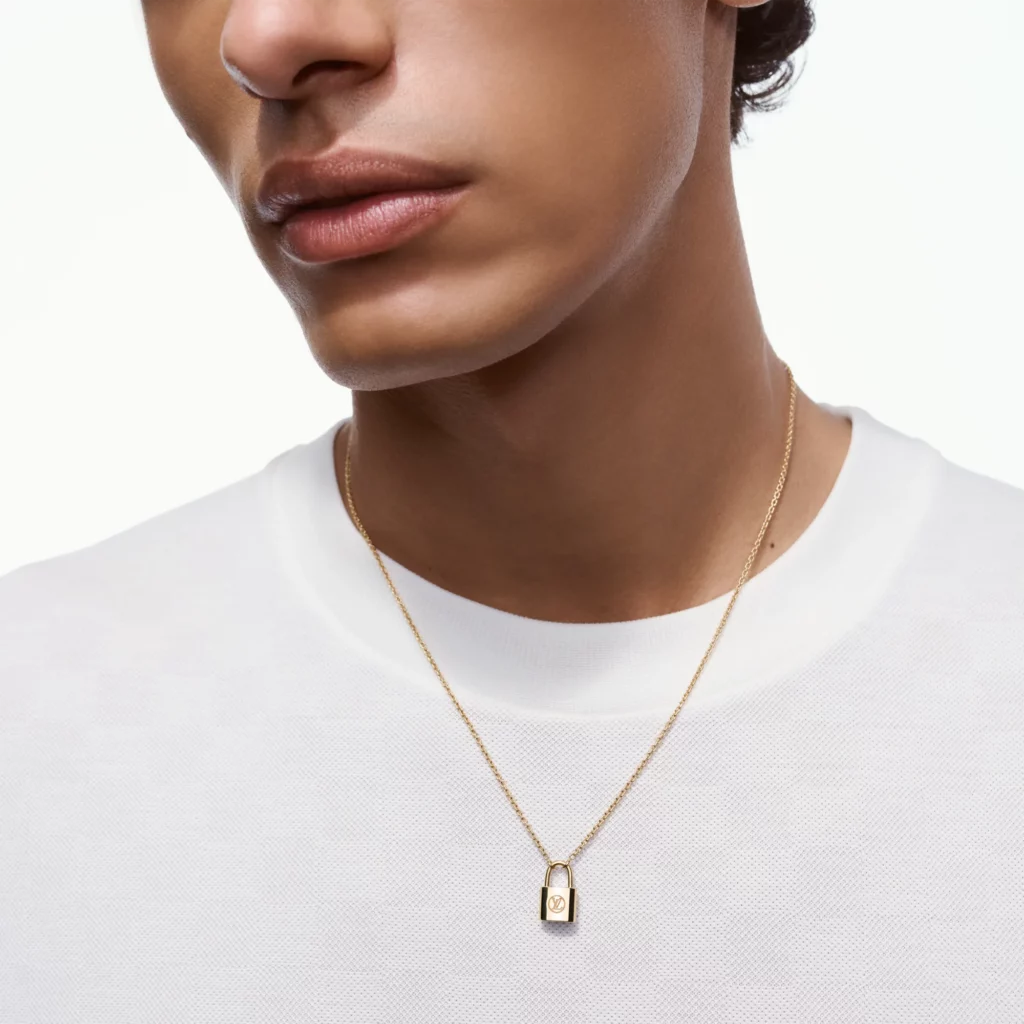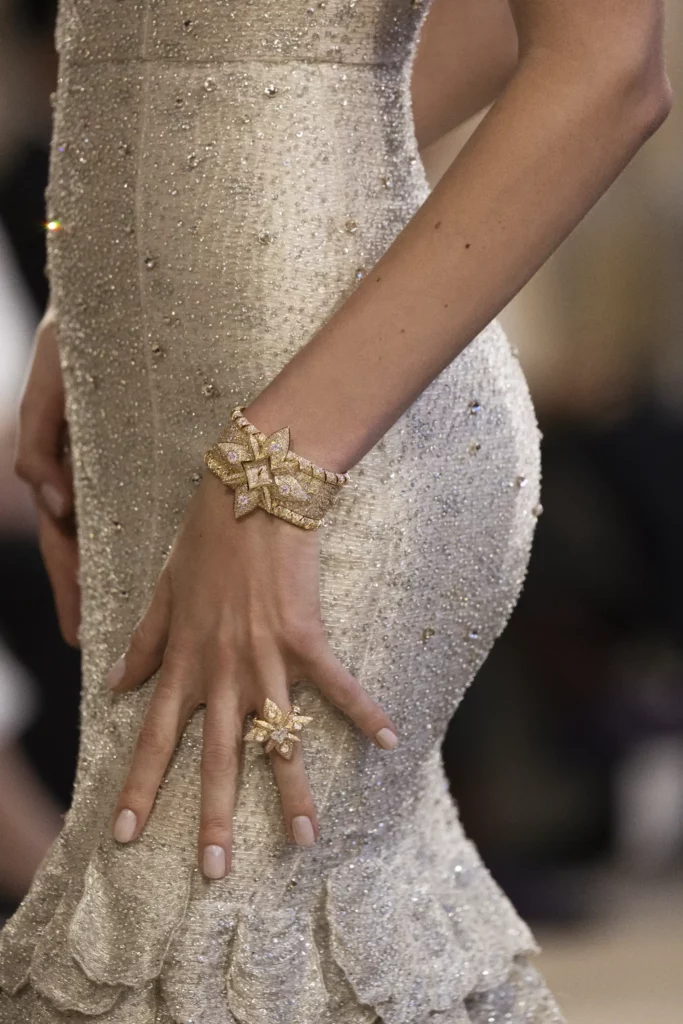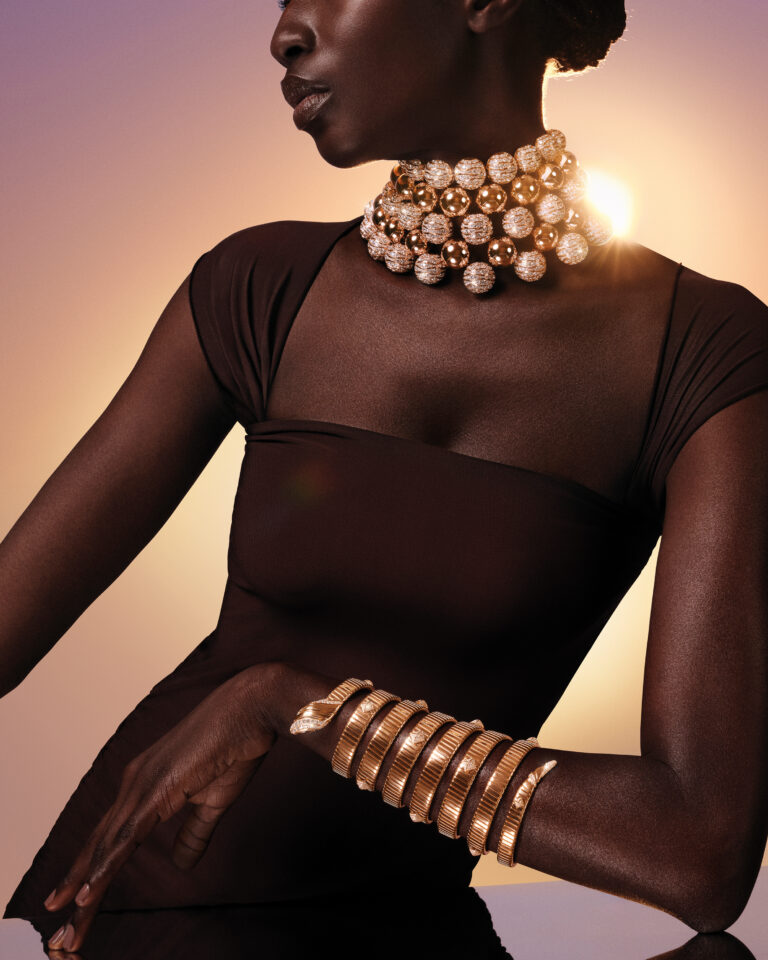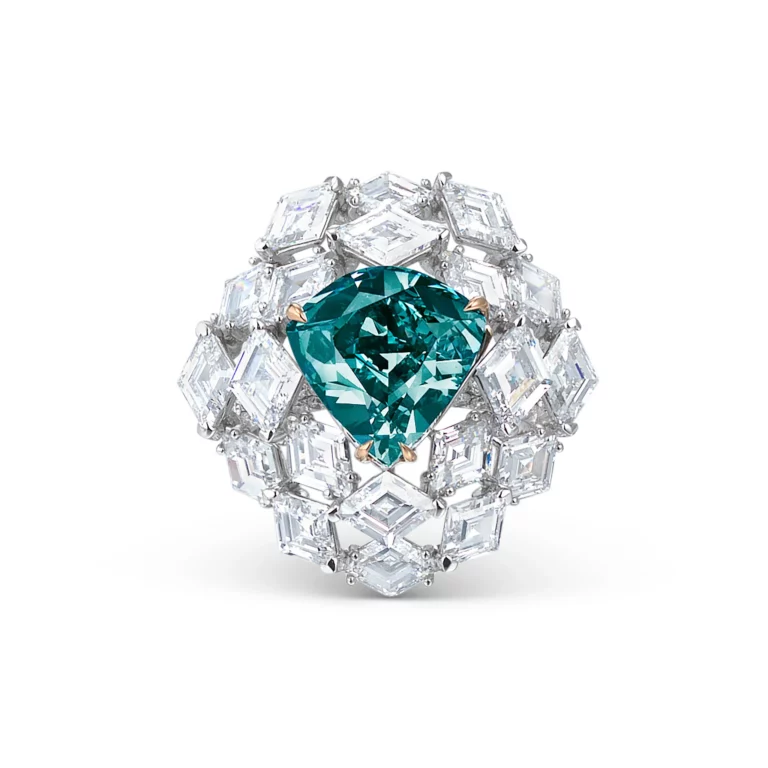


When Louis Vuitton opened his first store just a few steps from Place Vendôme in 1854, he turned travel into an art form in its own right with his sturdy, stackable flat trunks—both ingenious and elegant—that accompanied those who traveled the world. A signature instantly recognizable among thousands that would bring him fame: a pattern on canvas. For Louis Vuitton’s graphic codes emerged long before the jewelry that would draw inspiration from them, notably with the Damier in 1888, the Fleur de Monogram designed by Georges Vuitton in 1896—a motif initially conceived to thwart counterfeiters—and the “LV” ideogram, which his grandson Gaston-Louis Vuitton stylized at the height of the Art Deco era. It wasn’t until 2004 that the house truly entered the jewelry market, with “Empreinte,” a collection inspired by the studs on its trunks; high jewelry followed in 2008 with “Les Ardentes,” and a dedicated workshop opened on Place Vendôme in 2012. A late entry, to be sure, but one that was embraced and built step by step, much like a journey.
Translating its own aesthetic
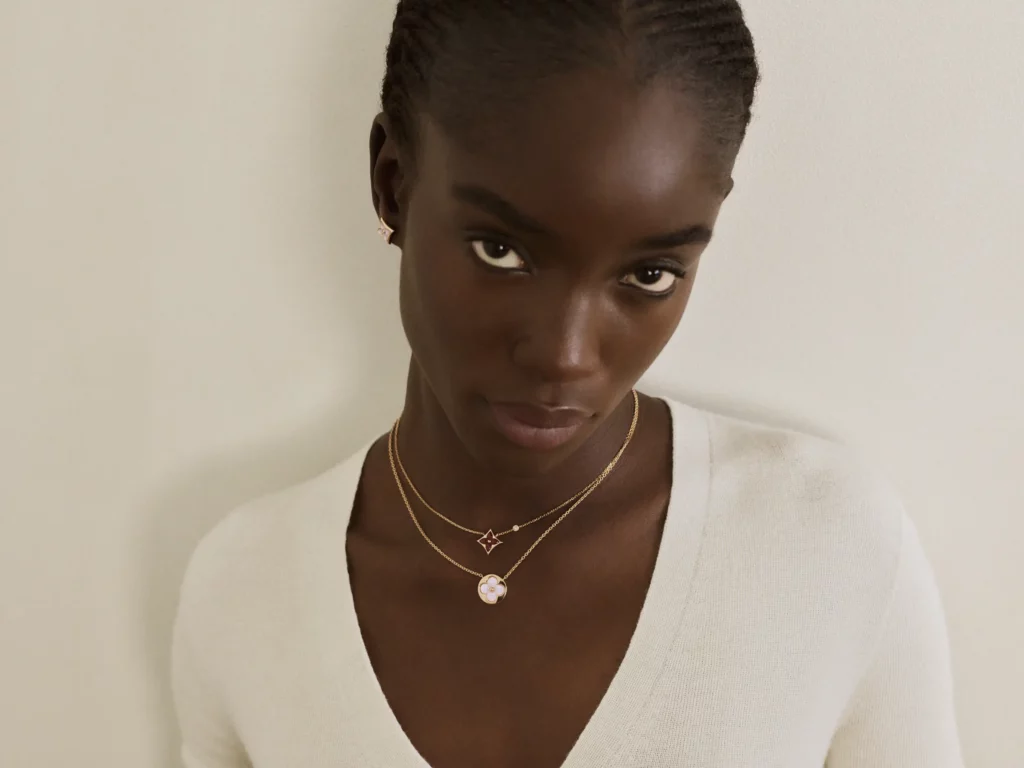
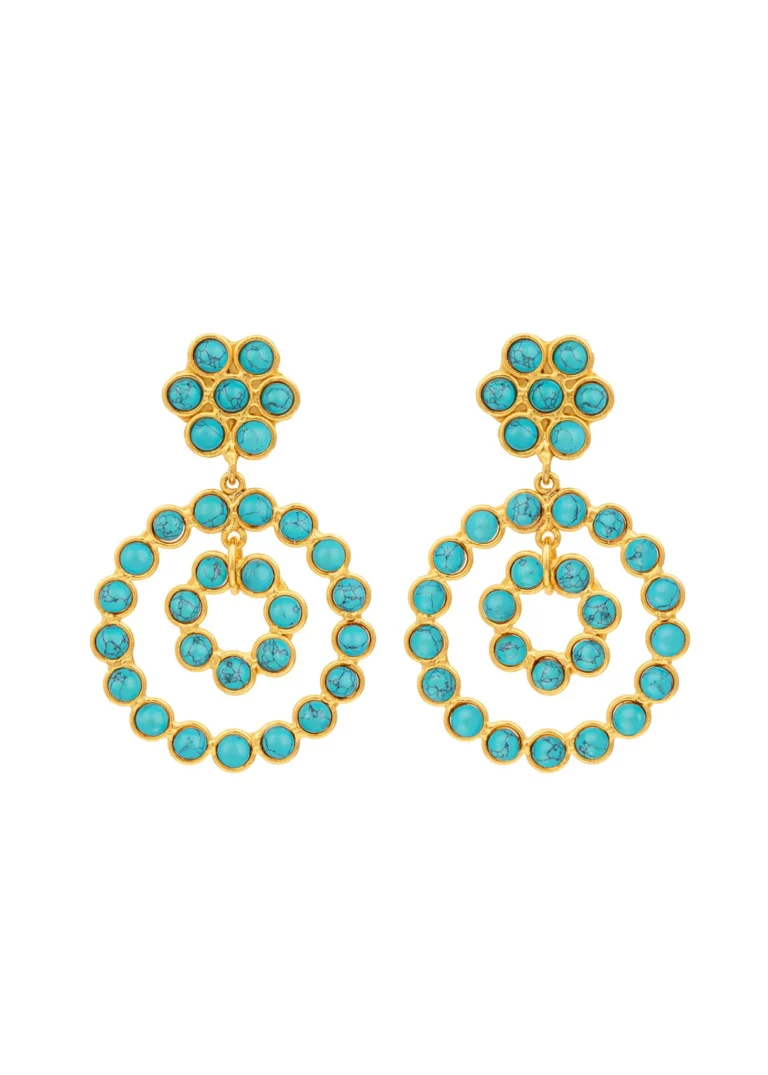
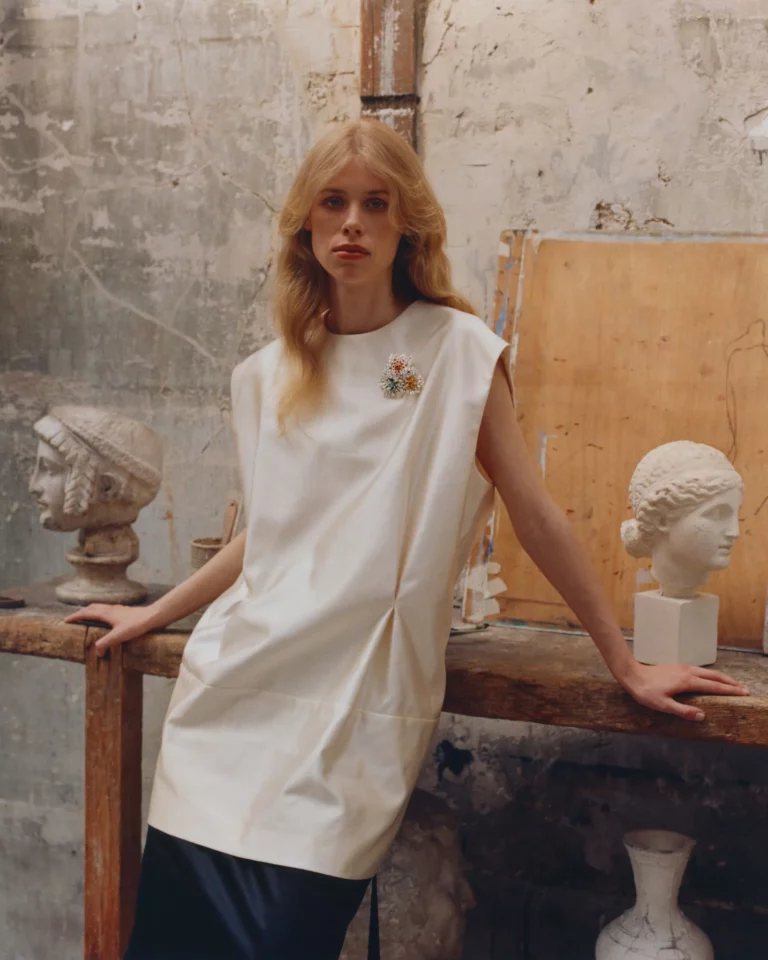
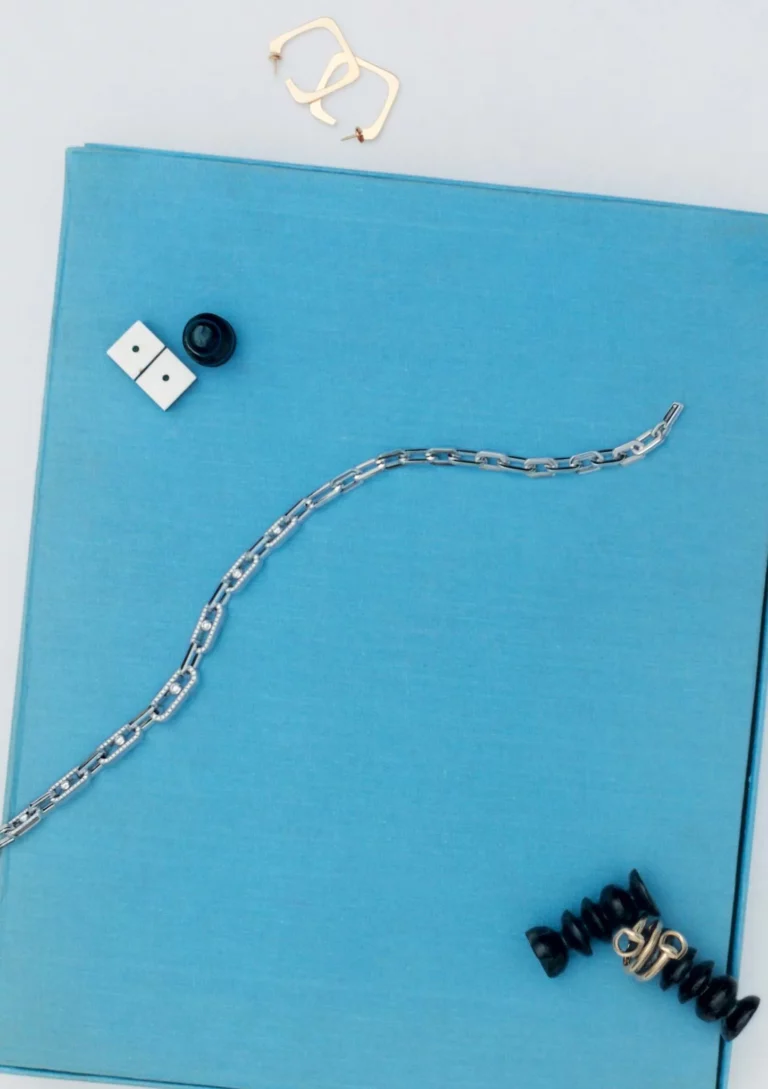
Louis Vuitton has never sought to replicate an existing jewelry style; instead, it translates its own aesthetic and motifs (the Monogram Flower, the Damier, the V…) into gold and gemstones. Jewelry is thus a fragment of the Vuitton universe that one wears; it extends, through gemstones, the spirit of boldness and travel that has guided the House since its founding. Where others inherit a lineage of jewelers, Louis Vuitton inherits an identity and brings it into the world of jewelry without betraying its own foundations.
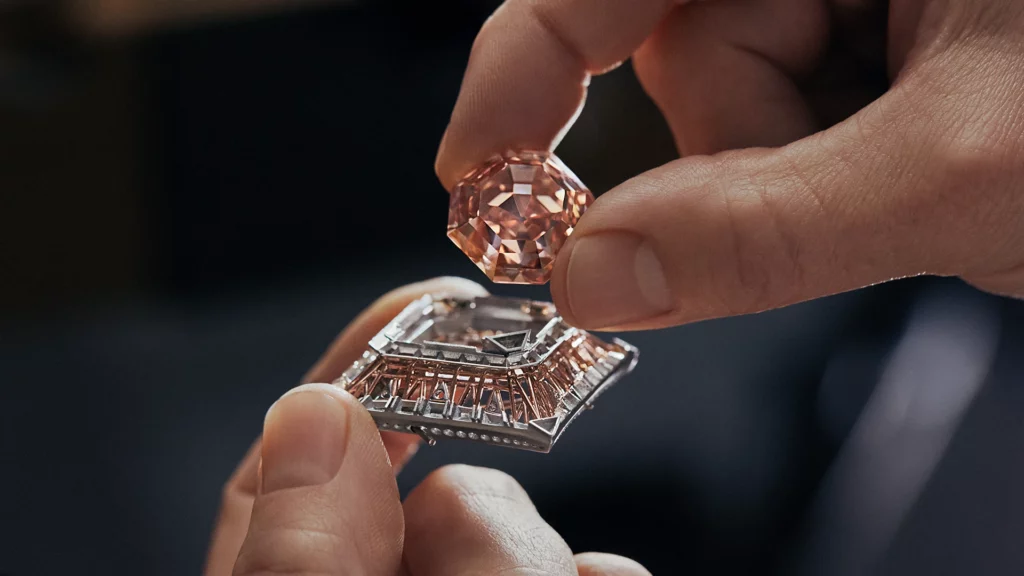
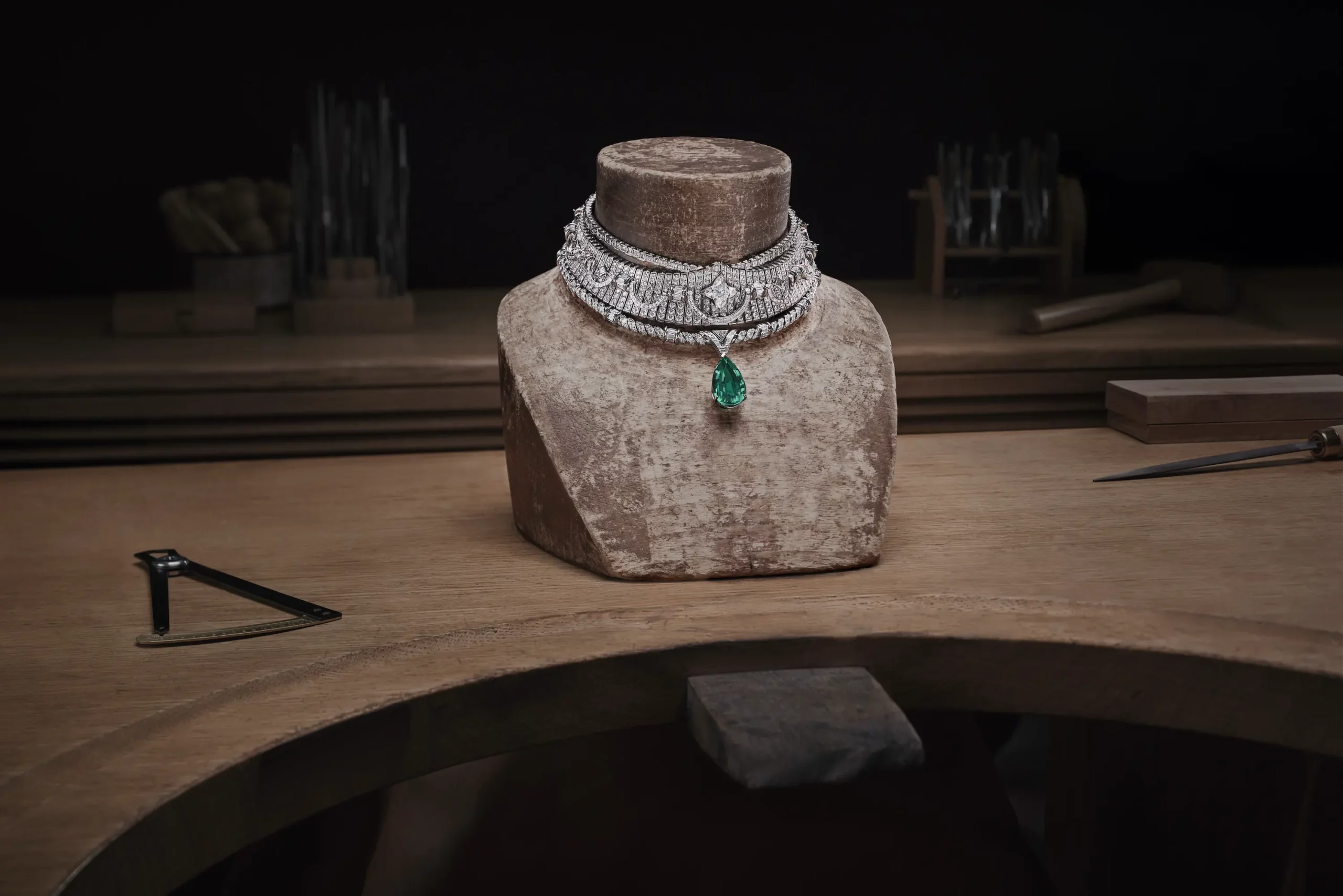
This translation draws on expertise built up over two decades. Beginning in 2008, after several years of research, the House developed exclusive diamond cuts such as the LV Monogram Star cut and the LV Monogram Flower cut, which engrave the Monogram flower in facets directly into the stone itself. It also sculpts hard stones in three dimensions—a delicate process that lends relief and depth to its colored flowers—and assembles its links by hand with all the meticulous care and craftsmanship required for fine jewelry and haute joaillerie pieces. It has also made traceability a contemporary hallmark by providing each diamond with a digital certificate recorded on the blockchain—developed in collaboration with the Aura Blockchain Consortium—that traces the stone’s journey from its country of origin to its sale in-store.

The era of fine jewelry
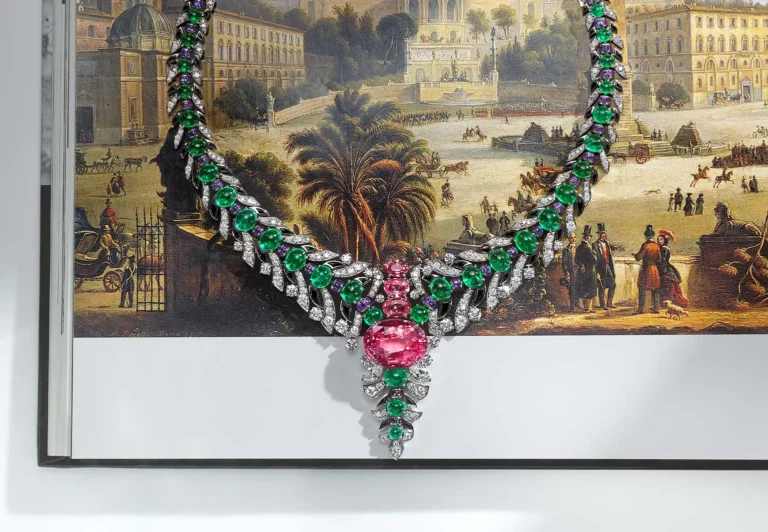
The brand’s success in high jewelry owes much to Francesca Amfitheatrof, creative director of watches and jewelry from 2018 to 2025, who previously worked in design at Tiffany & Co. She has endowed the house with an extremely cohesive and contemporary jewelry aesthetic and created collections—such as LV Volt—that are designed for everyday wear. In 2021, the Bravery collection celebrated the bicentennial of Louis Vuitton’s birth by retracing, piece by piece, the founder’s journey. Since then, each year has introduced a new theme in high jewelry: the sky with “Stellar Times,” the passage of time with “Deep Time,” the virtuosity of the workshops with “Virtuosity,” and the figure of the heroine with “Mythica.” The house has even acquired some of the largest rough diamonds ever discovered, such as the Sewelô (1,758 carats)—the second-largest rough diamond ever unearthed—and the Sethunya (549 carats), whose name means “flower” and echoes its emblem; both were sourced from mines in Botswana. In the span of some 20 years, the luggage maker has become a jeweler to be reckoned with, right down to its flagship store on Place Vendôme.